Dash is a complete, full-stack endless runner in Java. A runner dashes down a track of lanes, jumping hurdles, sliding under barriers and dodging traffic, and a level can start side on like a platformer and swing behind the runner into 3D halfway down the track. Around the run is everything a live game needs: accounts, levels with stars, leaderboards, live races between friends with voice chat, ghosts and replays, a track editor, crews, a shop and a console for running the game. Use it to build your own game with Codename One, or to see how a Codename One app and server share one codebase.
Generate your project · Read the guide · Browse the source
In the Initializr, choose the Dash endless-runner template, set your application name and package, and generate the project. The application source is licensed under MIT-0: you can modify it, use it commercially and keep your changes private without royalties. The runners, the track and the city are built in code: there are no third-party models or textures to license.
What comes with the application?
| Part | Included workflows |
|---|---|
| The run | A 3D track drawn with com.codename1.gaming and runners built and animated in code, swipe, tap and keyboard controls, power-ups, particles, and camera cues that blend between a side view, a chase view and a top-down view |
| Shared rules | One deterministic Java module, with no floating point, that the app, the server, the replays and the tests all run |
| Leaderboards | All-time, weekly, daily, friends and crew boards for every level, holding only runs the server played again from their input logs |
| Races | Quick races and parties with share links, in lockstep over WebSocket, peer-to-peer voice chat through WebRTC, text chat, emotes, spectating and replays |
| City runs | Pick two points on a street map and run the route between them: every street a stretch of track with its name overhead, every turn a corner, and the landmarks along the way beside the track |
| Track editor | Levels painted on a timeline: obstacles, pickups, camera cues and the coach’s lines, custom pieces, instant playtests, and publishing that requires the bot to finish the level |
| Social | Crews with their own boards and one-tap parties, invitations, and pushes when a friend beats your score |
| Monetization | Gem packs and outfits through the platform stores with server-side receipt checks, rewarded and interstitial ads |
| Engagement | Daily quests, a daily dash, weekly boards, chests, levels, trophies and achievements, and a seeded field of rivals on every board |
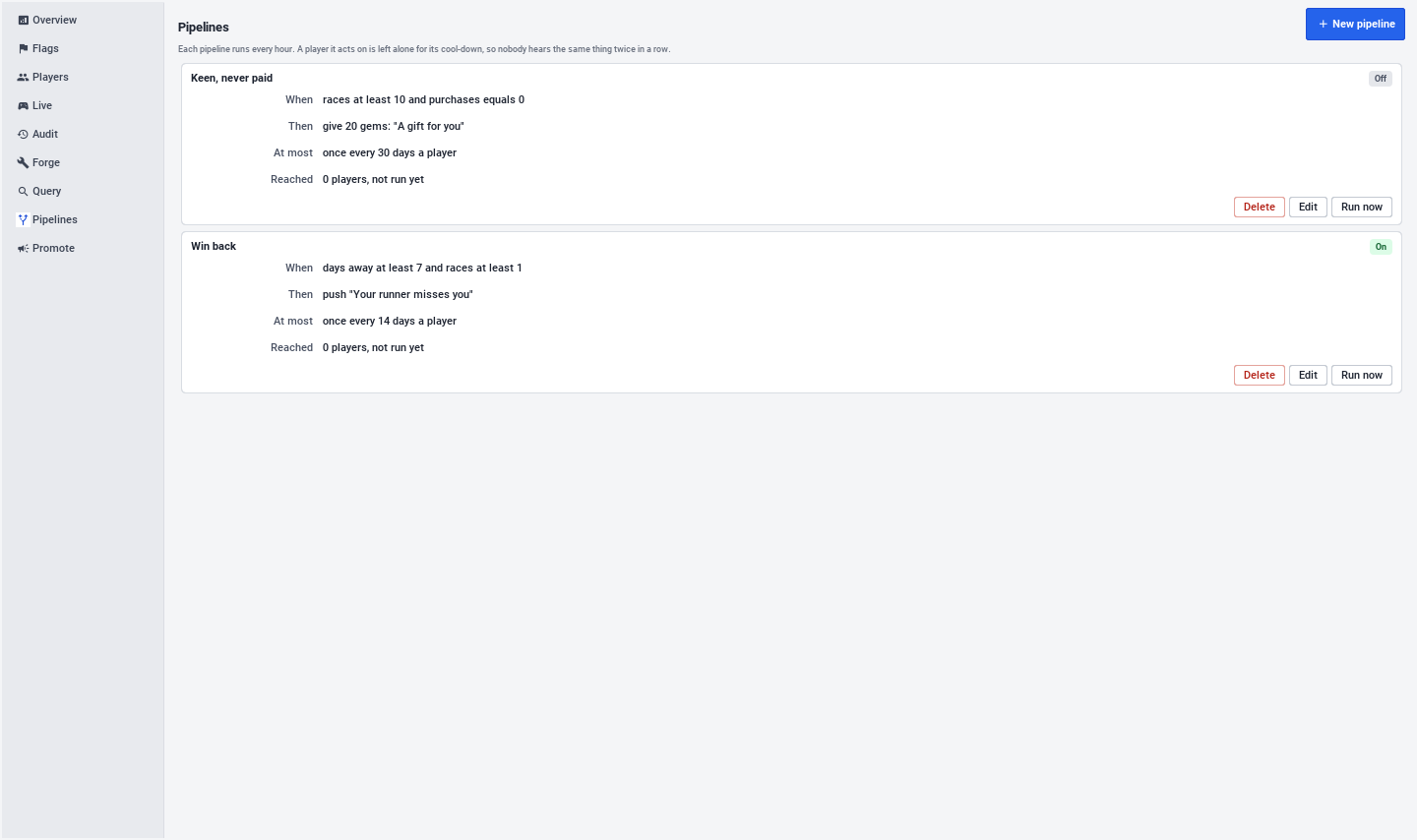
| Live operations | Reports, a player query, hourly engagement pipelines (pushes and gifts to a segment), broadcasts and the home-screen spotlight |
| Administration | Live races, the level moderation queue, automatic and reported flags, player lookup, and audited actions, as a phone app or a desktop console |
What does it look like?
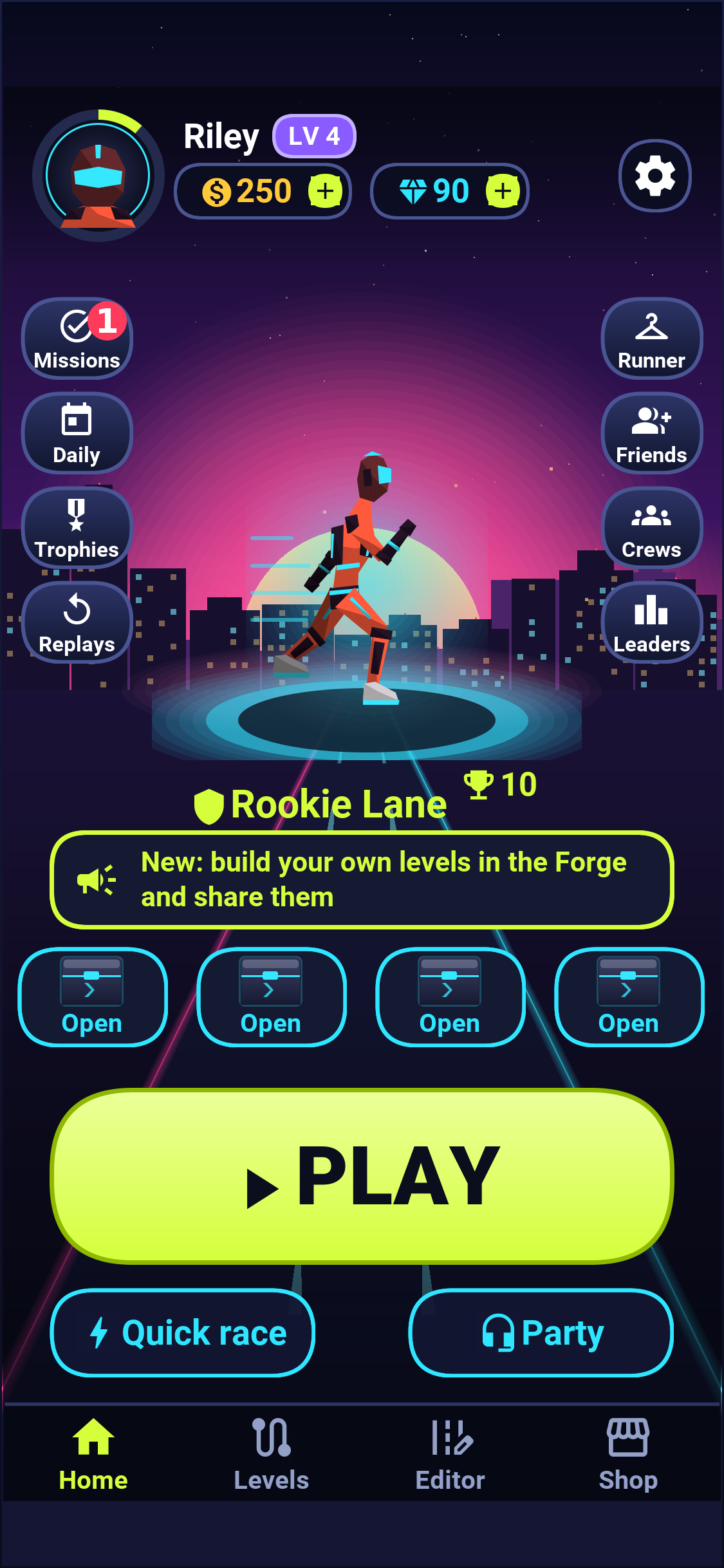
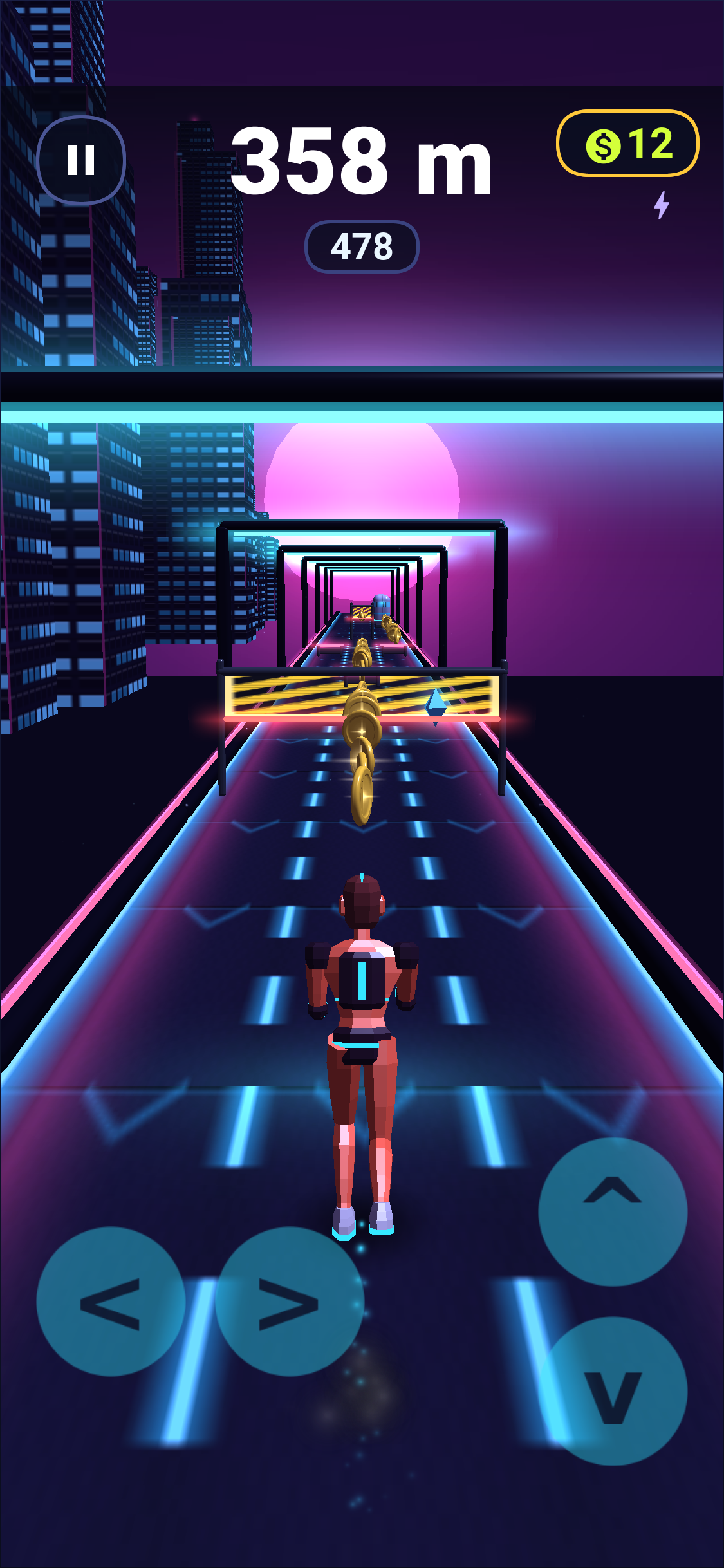
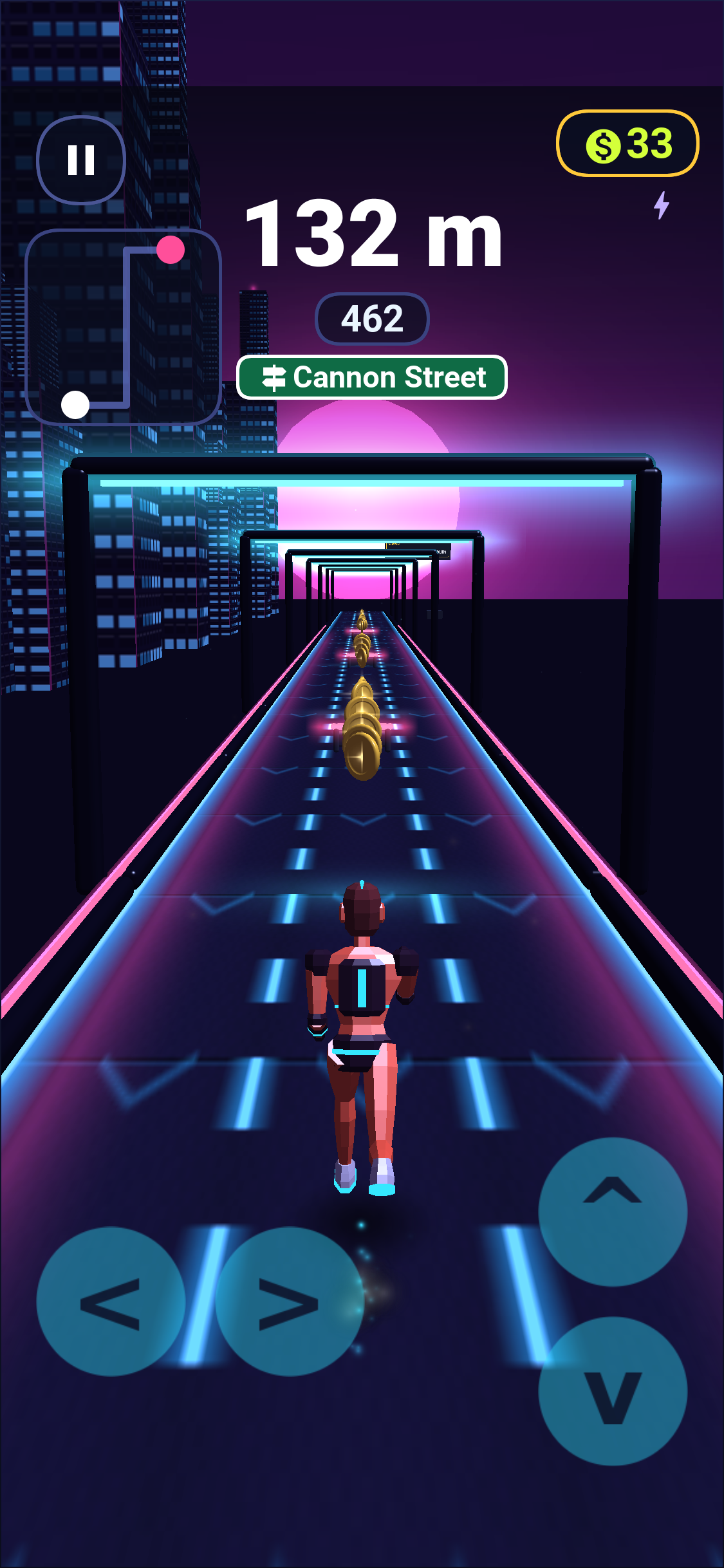
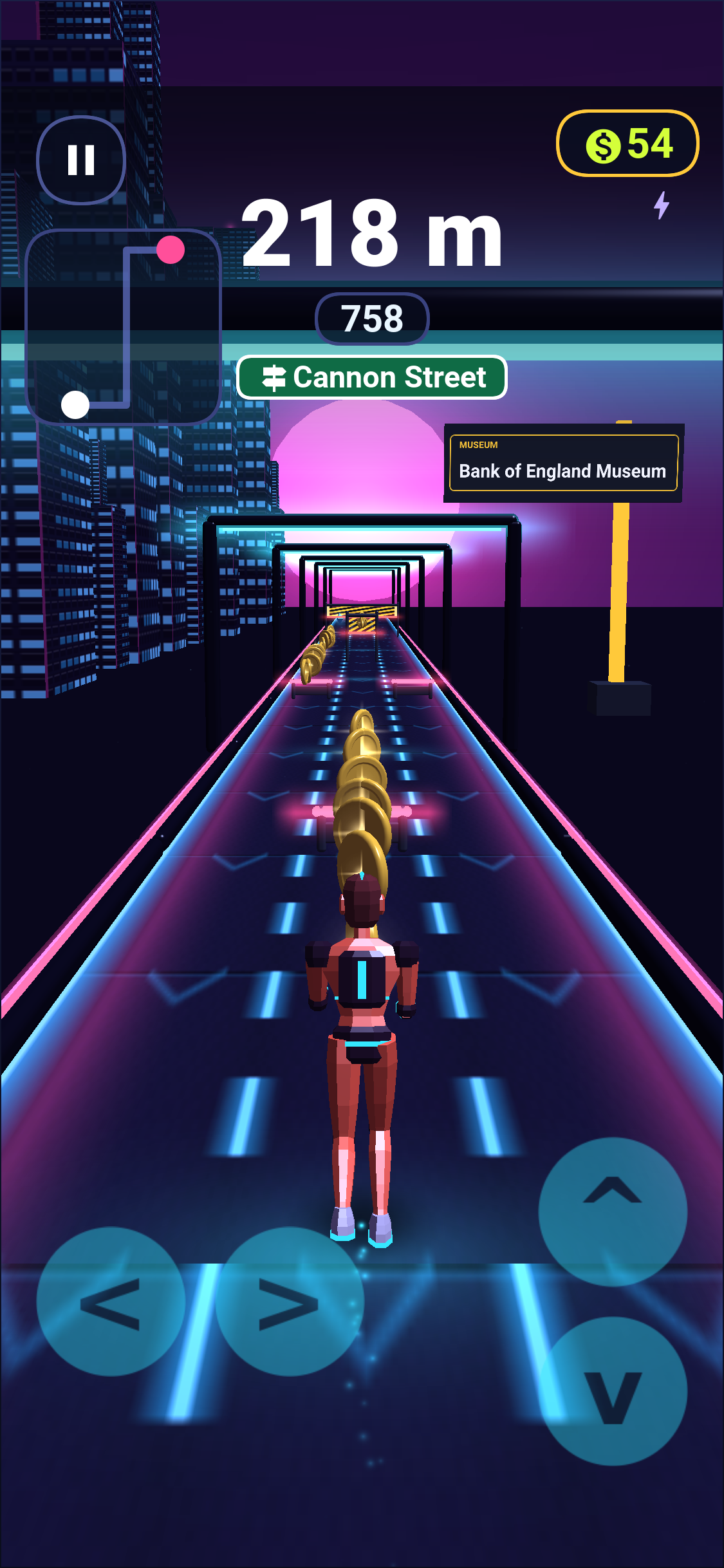
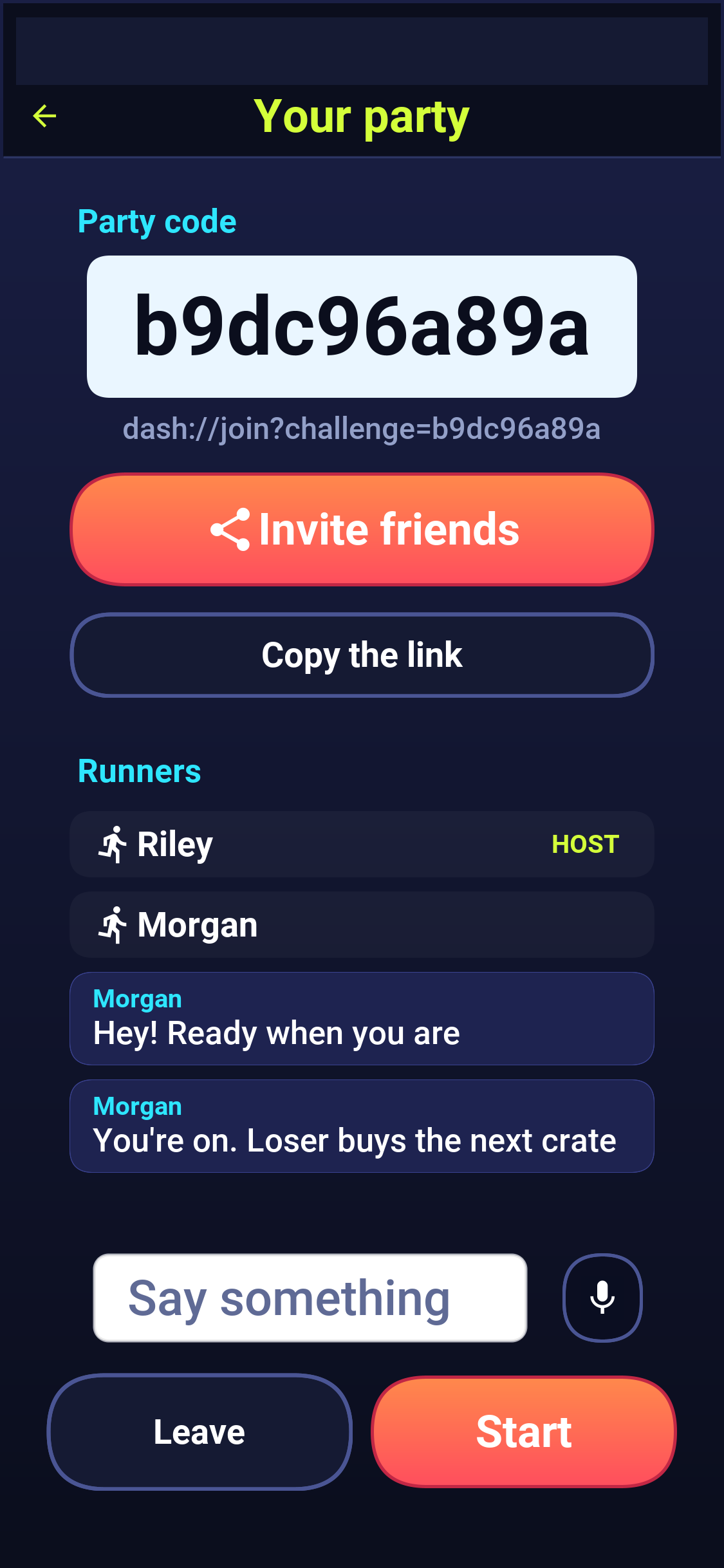
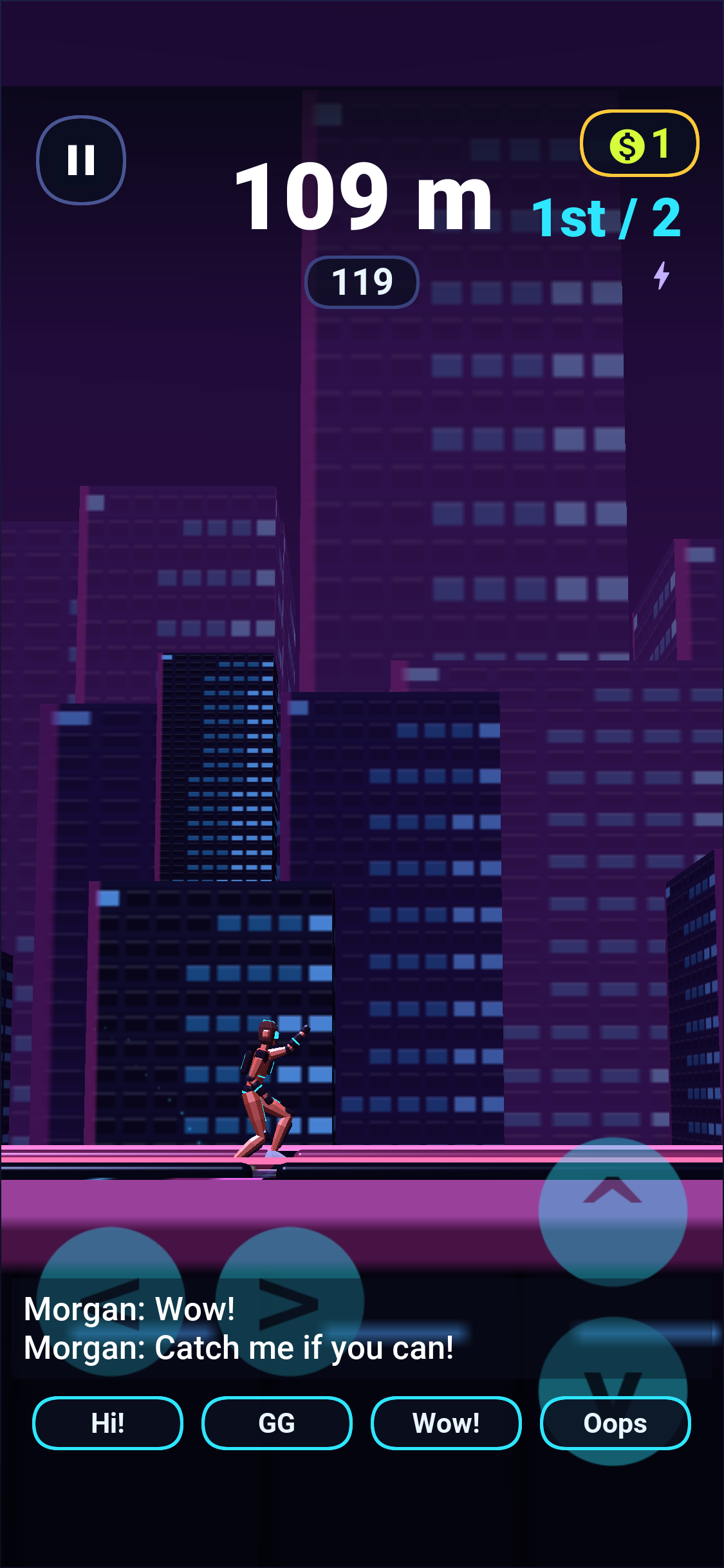
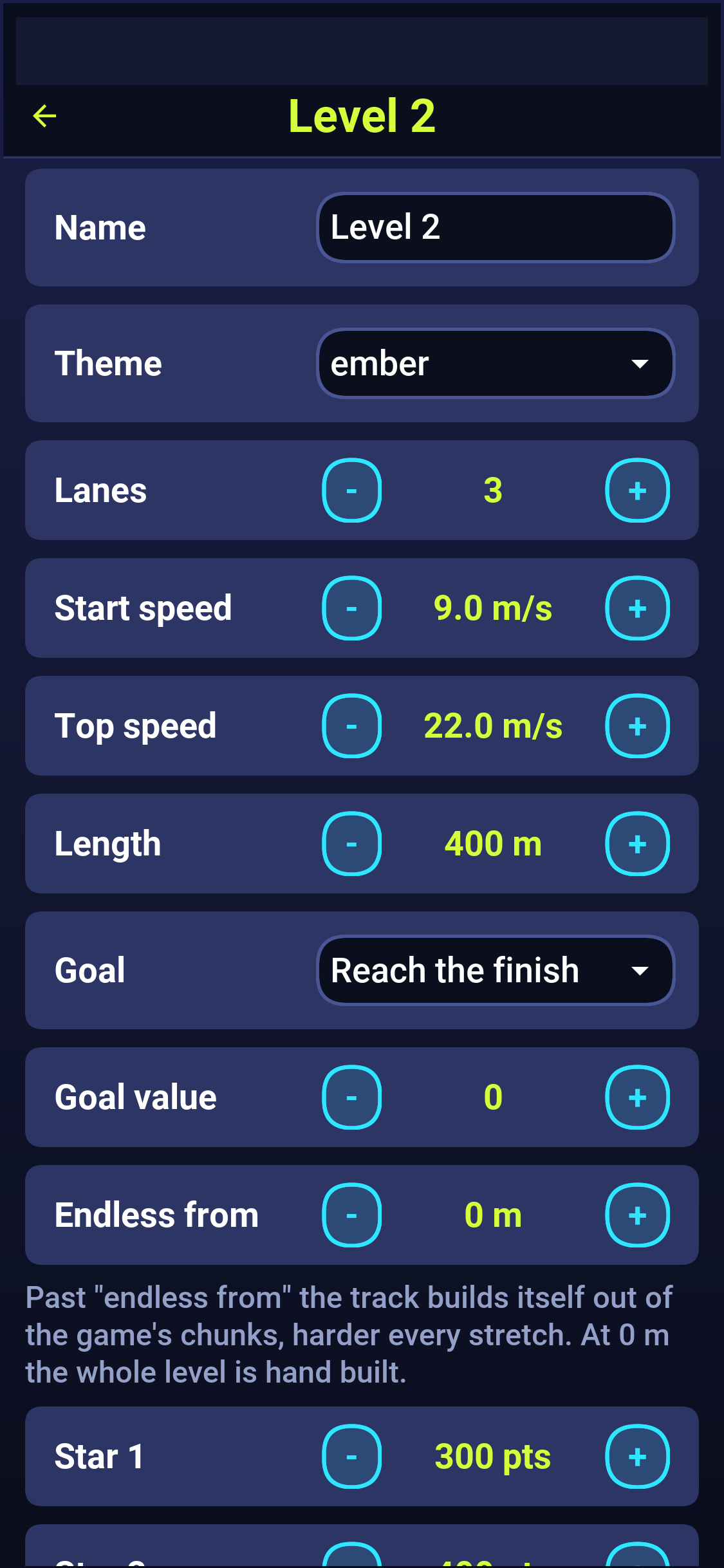
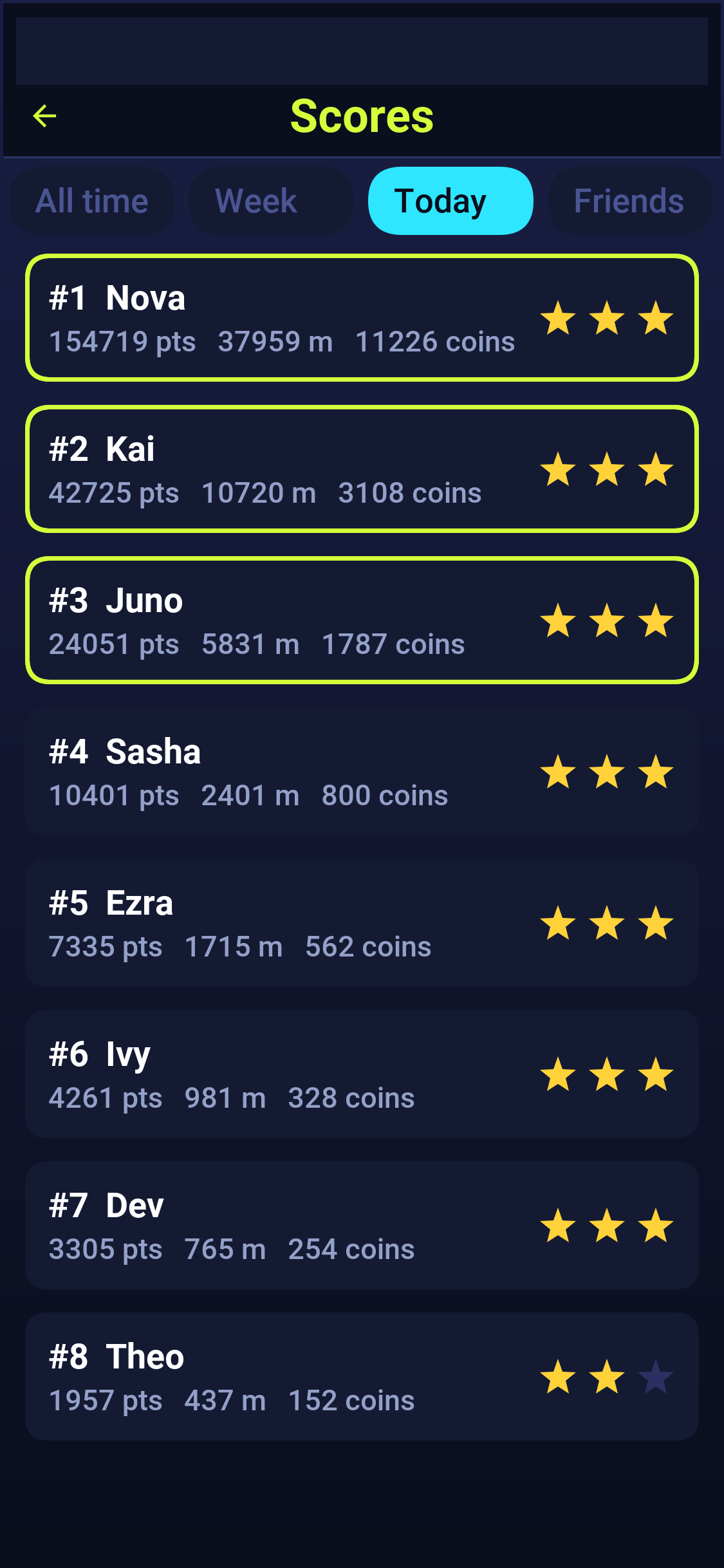
From first run to customization
- Run the project. The development profile needs nothing installed: an in-memory database, demo accounts and a simulated store, so you can run, race the bots, or race a second simulator straight away.
- Tour the game. The guide opens with what the game does, from the first level to races and the editor.
- Make it your own. The same guide then covers levels and their camera, new obstacles and runners, re-skinning, store products, ads, push and moderation.
What does a live game still need?
Dash supplies the game and its source. Publishing one also requires your own hosting, store products, ad units, a push key, and a TURN server for voice between players behind strict networks.
Looking for another kind of game?
Skirmish is the real-time card battler on the same architecture.